Hisense Channels
- 3.3
- Rating
- 1.00M
- Installs
- Free
- Price

 Analysis by App-foxy
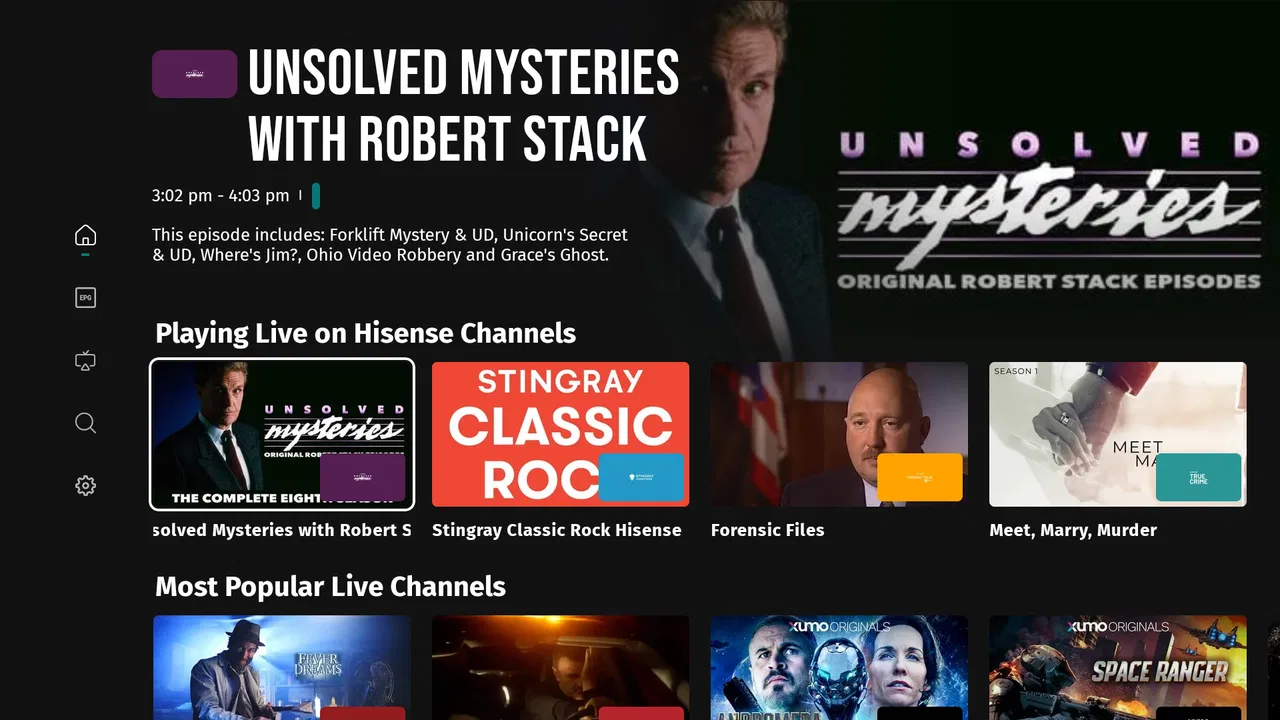
I spent time with Hisense Channels as a straightforward entertainment app for watching television content live or on demand. Its appeal is easy to understand: instead of opening a general streaming service and searching through a huge library, you get a TV-focused experience connected to the Hisense ecosystem. That narrower purpose can be useful when I want something familiar to watch without making a long decision.
The app is free, comes from V America Operations Inc., and is aimed at teenagers and older viewers. It has passed the one-million-install mark, although its average rating sits at 3.3 from roughly sixty ratings, so the public reaction is mixed rather than overwhelmingly positive. I would treat it as a convenient extra screen rather than an automatic replacement for every streaming service I already use.
How clearly the experience works for different viewers
I focus on how the experience’s viewing choices affect different people in everyday use, rather than assuming one interface suits everyone. A helpful next step is to match the way someone prefers to watch with the device and support they already use; that makes it easier to see where the service feels straightforward and where another option may be more comfortable.
You May Also Like

 Google Keep - Notes and lists
Google Keep’s Quiet Growth Shows the Appeal of Simpler Notes
As mobile work gets busier, Google Keep keeps winning a simple contest: capture a thought quickly, find it later, and get on with the day.

 Blood Strike: 2.5 Anniversary
Blood Strike’s Loadouts Turn Every Drop Into a Tactical Gamble
A close look at Blood Strike’s custom loadouts: how fast access to signature weapons reshapes its battle royale rhythm, rewards preparation, and narrows the gap between fights.

 Pandora - Music & Podcasts
Pandora’s Music Is Easy to Start, but Harder to Recover
Pandora’s strength is its low-effort path from a seed to a station. Its weak spot is how much confidence it asks you to place in connection, setup, and quiet recovery.

 8 Ball Pool
 Is Built on Rivalries, Rematches, and Routine
A close look at the rivalries, rematches, shared routines, and unanswered safety questions that turn a quick pool match into a persistent mobile community.

 Samsung Music
’s Quiet Strength Is Playing What You Already Own
Its reach comes less from spectacle than from dependable access to a personal library. That simplicity is both the app’s strongest retention engine and its ceiling.

 AccuWeather: Weather Radar
AccuWeather Review: A Quick, Clear Forecast for Everyday Decisions
For everyday plans, the best forecast is the one you can understand quickly. AccuWeather makes rain timing, radar, and local conditions easy to act on, with a few trade-offs.
More From Our News Desk



Readability and navigation matter more than a large catalogue
My first impression is that the service is built around immediacy. The central idea is not to make me manage a complicated media library, but to help me move between live television and available on-demand viewing. That is a sensible approach for people who prefer channel-style browsing or who find the endless rows of a conventional streaming platform tiring.
For a viewer with limited patience for menus, the most useful habit is to decide before opening the app whether the goal is live viewing or catching something on demand. That simple distinction reduces wandering. I also found that browsing from the main viewing areas is more comfortable than treating the app like a search-heavy catalogue. The experience makes more sense when I use it as a television guide with extra flexibility, not as a complete replacement for every service on the market.
Readability is also affected by the viewing environment. On a television across the room, text and programme information need to be understood quickly, while on a phone the same interface is viewed close up and handled by touch. I would check the device’s own display settings before judging the app: larger system text, stronger contrast, and a comfortable screen brightness can make a bigger difference than expected. These settings help with the surrounding device experience, even though they do not turn the app into a specialist accessibility tool.
There is a practical advantage in the app’s limited purpose. Someone who only wants to turn on entertainment may find a live-and-on-demand structure easier to explain than a service divided among subscriptions, profiles, downloads, watchlists, and several content categories. A family member who is less confident with technology can start with the basic question, “Do you want something live, or something you can choose?” That is a more manageable conversation than explaining a large streaming ecosystem.
At the same time, a focused design can feel restrictive for people who expect advanced discovery. If I want very precise filtering, a deep personal library, or a carefully managed queue across many providers, I would probably be more comfortable with a mature streaming platform designed around those tasks. Hisense Channels is at its best when quick access matters more than detailed control.
Motor and sensory considerations in everyday use
For people with reduced hand control, the main question is how much repeated pointing, tapping, or scrolling is required to reach a programme. A television-based setup can be less demanding than holding a phone for a long session, especially when the viewer is already seated comfortably. On a mobile device, however, small controls and repeated gestures can become tiring. I would use the largest practical display and keep the browsing route simple rather than repeatedly opening and closing programme panels.
A useful workaround is to prepare the device before handing it to someone who has difficulty with precise touch. Opening the app, moving to the intended viewing area, and leaving the device in a stable position can remove several unnecessary actions. This is not a hidden feature of the service; it is a realistic way to make a general entertainment app easier to operate.
For viewers with hearing differences, the most important consideration is whether the particular programme provides suitable audio options. I would never assume that every piece of content offers captions, transcripts, sign-language support, or adjustable dialogue. The app’s live and on-demand model may make content easier to reach, but it does not automatically guarantee equal access to every programme. If captions are essential rather than optional, I would test a few intended channels and programmes before relying on the service for daily viewing.
People who are sensitive to sudden sound or rapid visual changes may prefer to begin with a calmer on-demand choice instead of opening live television without preparation. Live viewing is less predictable because the viewer does not control the timing of what appears next. On-demand viewing can be the better route when stopping, changing the volume, or taking a break is important. That difference is one of the clearest practical trade-offs in this app.
For users with visual impairments, a large television can improve the physical size of programme information, but distance can still make menus difficult to interpret. A phone may offer closer viewing, yet touch navigation can introduce its own problems. I would choose the device based on the individual’s strongest ability: larger visual content for one person, easier hand positioning for another, and voice or system-level assistance where the device supports it. I would not describe the app as a dedicated screen-reader or low-vision product.
When the live-and-on-demand mix is genuinely useful
The most convincing everyday scenario is a shared living room. Imagine that I have a short break after dinner and do not want to negotiate several subscriptions or search through unrelated recommendations. I can open the service, look for live viewing, and settle into whatever fits the moment. If the household prefers more control, on-demand viewing is a better choice because someone can pause while another person gets a drink or steps away.
This flexibility can also help households with different routines. One person may prefer the rhythm of live television, while another may need to watch at a more suitable time. Having both approaches in one entertainment app reduces the need to explain two completely different ways of finding content. It does not solve every scheduling problem, but it makes the basic choice clearer.
I can also see value for viewers who become overwhelmed by too many options. A huge streaming catalogue sounds convenient, but it often creates decision fatigue. Hisense Channels may feel calmer when the viewer wants television rather than an evening spent comparing thumbnails. That is a meaningful strength for older relatives, casual viewers, and anyone who wants entertainment to feel closer to traditional channel surfing.
On the other hand, the service is less compelling for someone who already has a carefully organised collection elsewhere. If I mainly watch specific films, follow a particular premium series, or depend on downloads for travel, a general streaming subscription or a broadcaster’s dedicated app may fit better. The live-and-on-demand idea is useful, but it should not be confused with having every programme in one place.
Another situational issue is the device itself. The app supports devices running Android 7.0 or later, which makes it available to some older Android hardware. That can be helpful for households that do not replace phones frequently. Still, older hardware may offer a less comfortable screen, slower interaction, or weaker audio than a newer television or phone. Compatibility makes installation possible; it does not guarantee the same experience on every device.
What I would prepare before recommending it
Before recommending the app to a friend, I would ask three practical questions. First, do they want live television, on-demand flexibility, or both? Second, will they use a television from a distance or a phone close up? Third, do they depend on captions, specialised audio, magnification, or another assistive setup? The answers matter more than the free price because a service is only useful when the actual viewing situation works.
I would also encourage a short trial during the time of day when the person normally watches. A quick test can reveal whether the text is comfortable, whether the remote or touch controls are manageable, and whether the intended programmes provide the audio or display support needed. Testing a real viewing routine is more reliable than assuming that a general entertainment app will suit every ability.
For families, I would keep the first setup deliberately simple. Put the app in an easy-to-find position, adjust the television or phone for the viewer, and explain only the route they need: open the service, choose live or on demand, select something, and return when finished. Too much instruction can make a modest app feel harder than it is. The best experience comes from reducing the number of decisions rather than trying to teach every possible path.
Where the remaining barriers become noticeable
The biggest limitation is that convenience does not equal comprehensive accessibility. A general TV app may be easy to open while individual programmes still vary in caption availability, audio clarity, visual design, or pace. For a viewer who needs consistent support, that uncertainty can be a serious barrier. I would keep another service available if particular accessibility features are central to the household’s routine.
Live television also creates a control problem. A viewer who needs time to process information, avoid unexpected content, or pause frequently may find on-demand viewing more comfortable, but on-demand options are not necessarily a complete substitute for live channels. The app gives me two viewing modes, yet the modes serve different needs and should not be treated as interchangeable.
There is also a social barrier that is easy to overlook. In a shared room, one person may find the interface simple while another may need larger text, louder dialogue, or a different pace. The app cannot by itself resolve disagreements about volume, content, or timing. A household may still need a second device or another service to give each viewer an independent experience.
The public rating of around 3.3 suggests that the experience has not been uniformly smooth for everyone. I would not use that figure as proof that the app is poor, but I would take it as a reason to approach it realistically. The service is free, so trying it costs less than committing to a paid platform, yet time spent setting it up still matters. If the first session feels awkward on the intended device, I would not assume that repeated use will solve every problem.
The current release is version 2.0.5, and the app was released on February 21, 2025. Those details are useful when checking whether a device can run it and when explaining why the experience may continue to change. I would keep the app updated through the normal device process, particularly if a household depends on it for regular viewing, but I would avoid promising that an update will address a specific accessibility need unless the change is clearly documented.
My inclusive verdict for the right kind of viewer
I recommend Hisense Channels most readily to people who want a free, uncomplicated way to reach television content in live and on-demand forms. It is especially sensible for casual viewers, shared households, and anyone who prefers a channel-oriented experience over a giant catalogue. The ability to choose between immediate viewing and more controlled viewing gives it practical value in everyday routines.
I would be more cautious for viewers who require dependable captions, specialised audio, extensive text customisation, or highly predictable navigation. In those cases, I would test the exact programmes and device setup first, then compare the result with a service known for the specific support that person needs. The app’s general-purpose design may be adequate for some viewers and unsuitable for others.
My final judgement is positive but measured: its strongest inclusive feature is the choice between live immediacy and on-demand control, not a promise of specialised accessibility. The free entry point makes experimentation easy, and support for Android 7.0 or later helps some owners of older devices. But the best recommendation depends on the person, the screen, the viewing distance, and the programme requirements.
For me, this is a useful television companion rather than a universal entertainment solution. I would install it when I wanted a simple route into Hisense’s viewing experience, keep the interface and device settings comfortable, and judge it by a real household routine. If that routine works, the app can remove unnecessary complexity. If a viewer needs consistent assistive features or a deeper catalogue, another option will be the kinder and more reliable choice.
FAQs for Hisense Channels
01What is Hisense Channels and what features does it offer?
Hisense Channels is a streaming app designed to provide users with a wide variety of TV shows, movies, and live channels. It features an intuitive interface, personalized recommendations, and compatibility with both Android and iOS devices. Users can enjoy content from multiple genres, create watchlists, and benefit from high-definition streaming.
02Is Hisense Channels free to use, or does it require a subscription?
Hisense Channels offers a mix of free and subscription-based content. While many shows and movies are available for free, some premium content requires a subscription. Users can choose from different subscription plans to unlock additional features and access to a broader range of channels.
03On which devices can I use Hisense Channels?
Hisense Channels is compatible with both Android and iOS devices. It can be downloaded from the Google Play Store and the Apple App Store. The app is optimized for smartphones and tablets, providing a seamless viewing experience across different screen sizes.
04Does Hisense Channels support offline viewing?
Yes, Hisense Channels allows users to download selected content for offline viewing. This feature is particularly useful for those who wish to watch shows or movies without a stable internet connection. However, not all content may be available for download, and storage limitations may apply.
05How does Hisense Channels ensure content quality and security?
Hisense Channels prioritizes high-quality streaming by offering content in HD and 4K where available. The app also adheres to strict security protocols to protect user data and privacy. Regular updates ensure that the app remains secure and user-friendly, maintaining a reliable streaming experience.
Pros
- User-friendly interface for easy navigation.
- Offers a wide variety of streaming options.
- Customizable channel lists enhance user control.
- Regular updates ensure smooth performance.
- Parental controls provide added security.
Cons
- Limited offline viewing capabilities.
- Occasional buffering issues during peak times.
- Some premium content requires additional fees.
- Compatibility issues with older devices.
- Advertisements can interrupt viewing experience.

Hisense Channels
Gallery